Most of what a machined part costs — and most of what goes wrong with it — is decided before the first chip is cut. That decision happens in your drawing. We review every file that arrives, and the same dozen things come up again and again, in the same order of cost impact.
Why DFM comes before machining
A drawing that ignores tooling reality still gets made. It just gets made slowly: extra set-ups, extra electrode work, extra inspection, and a quote that looks expensive because it is. Ten minutes of review on your side usually removes a whole operation on ours.
The twelve checks we run on every drawing
Geometry and tooling
- Wall thickness. As a rule of thumb, keep aluminium walls at 0.8 mm or more and steel at 1.0 mm or more in machined prototypes. Thinner walls deflect while cutting, so they chatter, and chatter shows up as poor finish or out-of-tolerance features.
- Internal corner radii. Every internal corner matches the radius of the cutter that made it. State the radius you need rather than leaving a sharp corner on the drawing, and add a small relief if the pocket has to seat flat on a mating face.
- Pocket depth versus cutter diameter. A deep, narrow pocket forces a long, thin tool and slower feeds. Past roughly four times the cutter diameter, expect a step up in both cycle time and tool breakage risk.
- Thin floors and unsupported spans. Long unsupported floors vibrate. Either thicken them, or accept a second operation to bring the floor to size after roughing.
Tolerances and datums
- A general tolerance plus critical dimensions. Stamping ±0.02 mm on every dimension multiplies inspection time and scrap risk without improving the assembly. A general block tolerance with a handful of clearly marked critical dimensions is both cheaper and more honest.
- Tolerances on features that do not function. Clearance holes, cosmetic grooves and clearance slots rarely need tight limits. Every unnecessary tight tolerance is a dimension somebody has to measure and defend.
- Datum scheme. Choose datums that reflect how the part is used — usually a mounting face plus two holes — and dimension from there. Dimensioning from several different references stacks up tolerances that then have to be bought back with a tighter machine.
- Tolerance stack across an assembly. When two or three machined parts come together, what matters is the gap, not the individual dimensions. Tell us which gap you care about and let us decide where to spend the tolerance.
Features, finish and logistics
- Threads. Keep to standard metric or imperial series, and specify tapped depth generously — full thread needs roughly twice the diameter in usable depth, and a bottoming thread usually needs a relief groove or a form-tapping process.
- Hole sizes. Standard drill and reamer sizes keep you off special tooling. If a hole is a bearing seat or a press fit, say so; the fit tolerance matters far more than a three-decimal diameter.
- Undercuts and multi-side features. Any feature that cannot be reached from the main set-up adds a set-up, a fixture and a little more tolerance stack. Flag them so the price is honest instead of surprising.
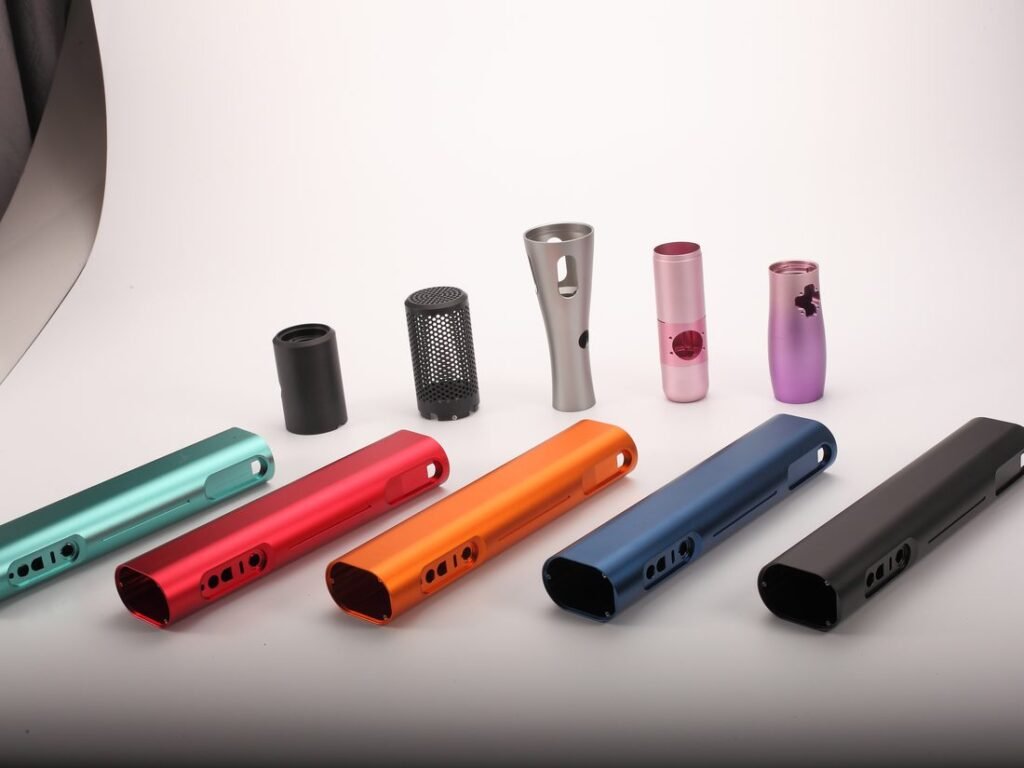
- Finish, deburring and packaging. Say which faces are cosmetic. “As machined” is fine for functional parts; if an anodised surface has to match a sample, send the sample or a photo with the drawing, and specify edge break and how parts should be packed so they do not rub in transit.
What to put in the RFQ email
- 3D model in STEP or IGES, plus a 2D PDF for the dimensions that matter.
- Quantity now, and the annual volume if you expect repeat orders.
- Material and temper, or the function if you are unsure.
- Finish specification, cosmetic requirement, and any sample photo.
- Whether this is a first article for a new design or a repeat order.
- Deadline, and whether it is fixed or negotiable.
On machined prototypes, roughly four fifths of the cost is set by design decisions rather than by the machine that cuts it. That is the part of the quote a buyer can still influence.
What you get back from us
Every file gets a short DFM note: what we would change, what it saves, and which tolerance is driving the price. Then a quote in about one working day, with the one-time costs separated from the per-part costs so you can see what changes when the quantity changes.
Send a drawing to info@xinwinfhardware.com and we will run these twelve checks on it — or read rapid prototyping to see how prototypes move into small batch production.

We quote, program, machine and inspect custom parts in Shenzhen — turning, milling, Swiss-type and finishing. Everything in this blog comes from drawings we have actually run, including the mistakes. Questions about your part? Email info@xinwinfhardware.com.